CASANETA: A family, a truck and the road ahead
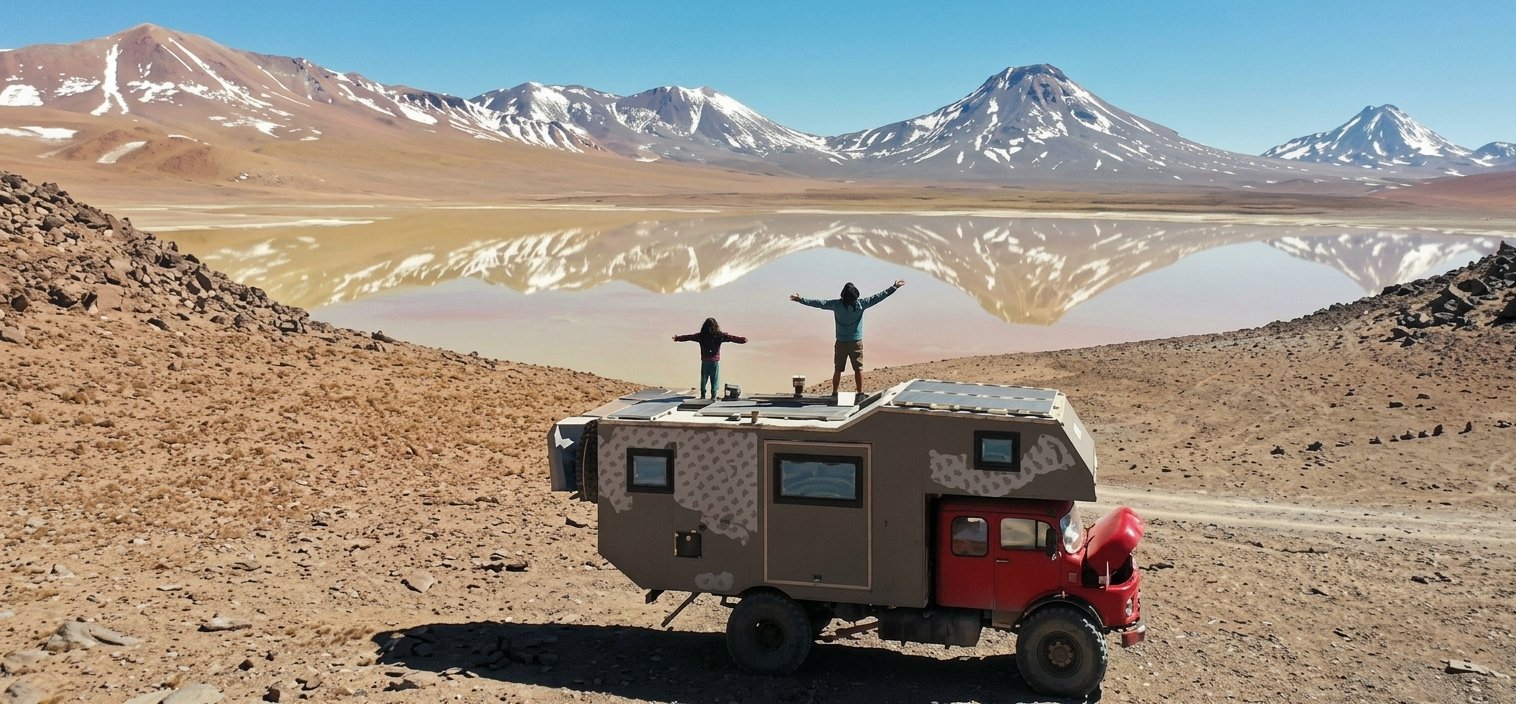
Melisa and Aarón turned their desire to discover the world into La Casaneta, a home on wheels where they travel across Chile, educate their children and adapt their plans to the road.
Melisa and Aarón began by travelling through Europe, Africa and Asia, but family life changed the route. After the arrival of Almendra and Nahual, they built La Casaneta, a home on wheels that took nearly two and a half years to complete. Today they travel across Chile, educate their children on the road and adapt their plans as they go, with the United States, Africa and Asia still ahead.
““That is the beautiful part: life is not a fixed plan, but a road that takes shape as you travel it.””
From discovering the world to building a home
Before La Casaneta existed, there was already a desire to discover the world. Melisa began travelling alone to Ireland, and Aarón joined the adventure later. Together, they explored Europe and other countries by plane, bus, ferry, BlaBlaCar, shared vehicles and even hitchhiking.
“The world became our true home,” Melisa says. With the arrival of Almendra and later Nahual, travelling stopped being only a couple’s adventure and became a family project. Their answer was to build their own home on wheels.
“The first thing was love,” Melisa explains. “I think that desire to discover is what really drives us.” She says the transition from the idea to travelling was not difficult. They had good careers, were not very consumerist and could save quickly to keep moving.
Life together, without an escape route
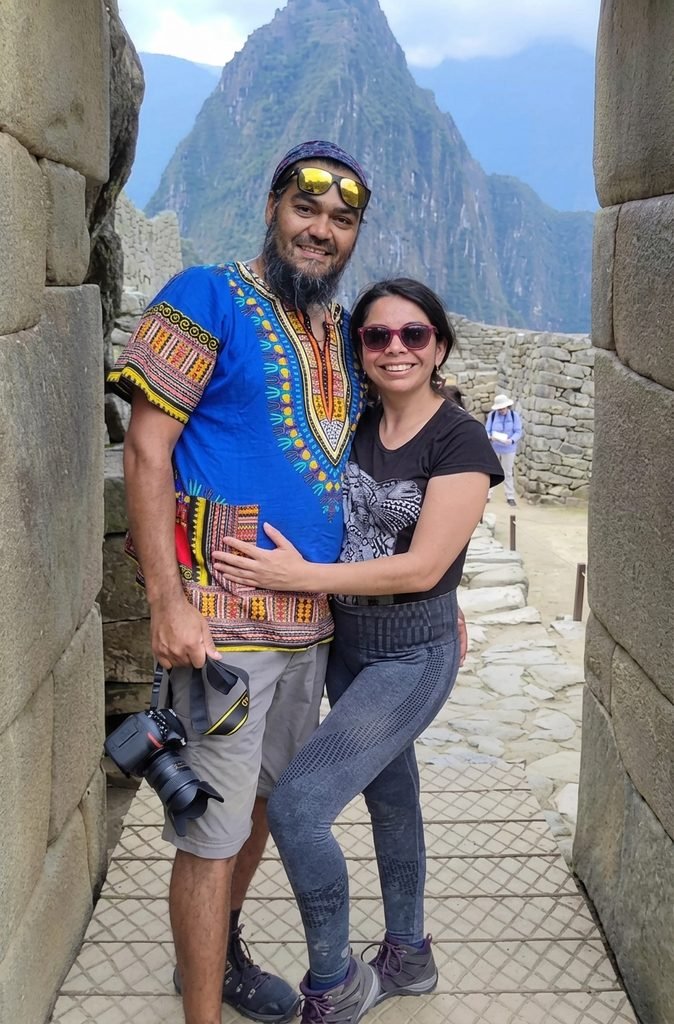
Sharing a cab and living space every day requires its own rules. For Melisa, the strength of their relationship comes from genuinely getting along.
“There is love and respect and, after more than ten years together—almost eight living 24/7—we still do not get bored,” she says. “Each of us does what we want, when we want. Honestly, after so much time together, I do not know how we have not ended up killing each other—laughs.”
The children have changed the rhythm of life too. They are funny, but demanding, and at home the family never stops. Becoming a mother changed Melisa completely, while Aarón has been more patient, she says. Despite the intensity, they listen to each other, love each other and try to do what is best for one another.
A truck, a family and the road’s complications
The truck was Aarón’s idea. At first, Melisa did not want one because it made her feel unsafe and she thought everyone would want to rob them. That changed after they met a Spanish couple in Arica who had travelled extensively in a truck, including through Africa.
They explained that the height made the vehicle very safe because it was extremely difficult to open the door from outside. “And it is true, because I cannot even reach the door of our own home; Aarón always has to open it—laughs,” Melisa says.
That height and size can also create problems. In the Altiplano, rain washed away part of a dirt road while they were heading to some hot springs. The track was one-way, making it difficult to reverse.
“The good thing is that the truck has power, and in moments like that you have to stay calm and breathe,” she says. Melisa got out to guide Aarón, and with patience they managed to turn around. For her, those moments are part of the adventure. People also help, offer advice and share a smile that brightens the road.
What travel leaves behind
Different countries have shown them very different realities. In Greece, Melisa was struck by people gathering in cafés to drink coffee and smoke cigarettes, as well as by their warmth. In Russia, the metro surprised her with stations so deep they seemed like bunkers. Africa and India also challenged what they were used to seeing, while visiting a concentration camp left one of the strongest impressions.
“For me, it was horrible; I could truly feel the horror experienced by the people who were there. It is one of those things that stays with you forever,” she says.
Long-term travel has also changed their idea of home. Having a fixed schedule, working from 8 to 6 and living in a permanent house now belong to what Melisa calls the traditional way of living. Returning to it would be difficult.
“When we are travelling, we never think about going back to the city,” she says. “It is a different rhythm of life, and honestly I would not trade it for anything.”
Two and a half years to build La Casaneta
The hardest part of the project was not travelling but building the vehicle. La Casaneta took almost two and a half years, with little help, while Melisa was raising the children and had recently had Nahual.
“Many times we wanted to give up on the whole thing, quit and say: ‘This is as far as we go.’ But the desire to have our own space, to build something that was ours, was stronger than the exhaustion.”
Looking back, she believes the effort was worth it. The house is heavy and tall, the bathroom is expensive and not particularly practical for a family of four, and the overall design could be improved. Yet the mechanics are simple, the vehicle is reliable and the family has its own space.
“Even with all its ‘flaws’—because it is far from being a perfect home—we have our own space, and we have been able to calmly find solutions to each problem as it comes along. In the end, that is what really matters.”
Learning and adapting on the road
Education is now part of the family’s travelling life. Melisa teaches the children at home, following the textbooks for each grade. Almendra is in Grade 4 and can work through the material at her own pace. She also reads a lot for her age, and the family has online English and chess lessons.
Melisa has not enrolled her in an online school because she is anti-screen and would rather wait until she is older. Nahual is younger, so she does not push him, although he enjoys using his preschool and kindergarten books. Sometimes Melisa teaches him, and sometimes Almendra does.
Their plans continue to change. They want to visit the United States, see the Atlantic coast they have not yet visited, go to Disneyland and take a cruise. The idea is to buy an RV there and travel for about six months, then return to Chile, keep exploring the country and later cross into Africa to reach Asia.
For now, La Casaneta will evolve step by step. A 2.0 version may come someday, but the family is enjoying each stage. Their story has already changed several times: from backpacking through Europe, Africa and Asia, to travelling with children, returning to Chile and building their own RV.
“That is the beautiful part: life is not a fixed plan, but a road that takes shape as you travel it.”